

FREE SHIPPING on purchases over 50 €
*Valid for consumables
When is it worth paying for Premium quality and when is standard enough
20/03/2026
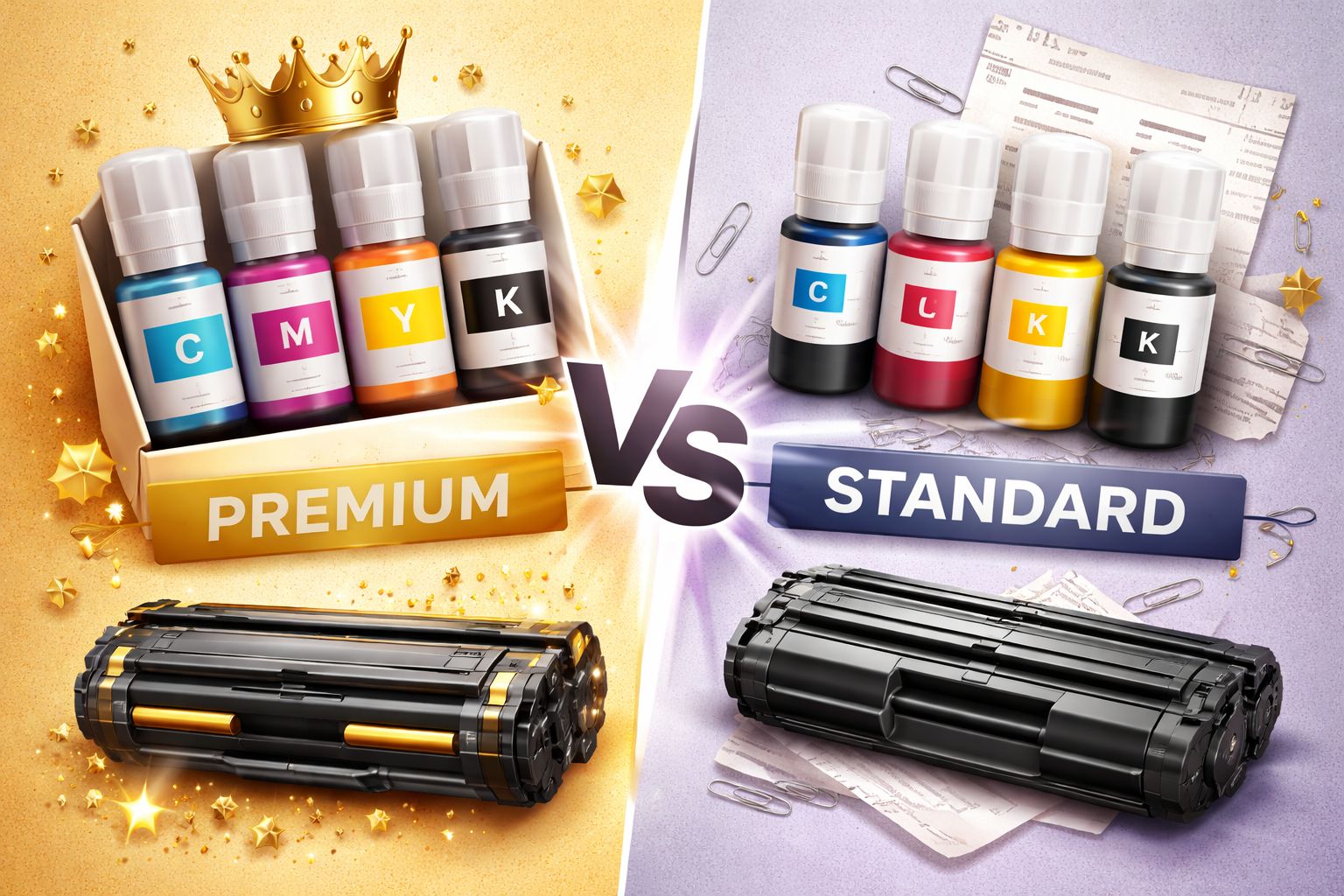
Premium quality in consumables is about the overall printing experience—not just the final result on paper. It includes greater performance consistency, more even coverage, better behavior in continuous printing, and longer lifespan of the consumable itself.
In premium products, the composition of ink or toner is more controlled, tolerances in mechanical parts are tighter, and quality control is stricter. This results in fewer failures, fewer reprints, and more predictable output.
When Premium quality is essentially necessary
There are cases where choosing premium is not a luxury but an investment. When your prints have a professional purpose, the impression you leave matters. Client presentations, business proposals, contracts, documents with logos or corporate identity require deep black, accurate colors, and consistency from the first to the last page.
Premium quality is also worth it when print volume is high. In offices, businesses, or professional environments, every interruption, every poor print, and every reprint has a cost in time and money. In such cases, stability and reliability are more important than a lower purchase price.
Finally, for heavily used printers, premium consumables contribute to the overall health of the device by reducing small issues that accumulate over time.
When standard quality is absolutely sufficient
Standard quality makes perfect sense for everyday, practical use. Personal prints, drafts, notes, school assignments, internal office documents, or test prints do not require maximum precision.
In these cases, the difference in the final output is often negligible, while the cost difference is real. Standard quality fully meets the functional need of printing without burdening the budget.
For users with low to medium print volumes, standard quality is a logical and balanced choice.
The real criterion is not price, but usage
One of the most common mistakes is comparing premium and standard quality based only on purchase price. The right question is not “how much does it cost,” but “how much does it cost me per print and per use.”
A premium consumable may cost more but deliver higher real yield, fewer rejected pages, and more consistent performance. On the other hand, a standard product may be cheaper but require more frequent replacement or more reprints.
When viewed holistically, the choice becomes clearer.
A hybrid approach: the smartest solution
In practice, many users don’t need to choose exclusively premium or exclusively standard quality. A hybrid approach is often the most efficient solution: premium consumables for important, professional prints and standard quality for everyday use.
This way, you maintain high quality where it matters without overspending where it doesn’t.
The Printking approach to quality selection
At Printking, premium and standard quality are not seen as “good” and “bad” options. They are different solutions for different needs. Each product has a specific role and is designed for a specific type of use.
The goal is not to spend more, but to spend wisely. To understand when premium quality returns value and when standard quality fully meets your needs.
Premium quality is worth it when printing has professional importance, high volume, or requires absolute consistency. Standard quality is worth it when usage is everyday, practical, and without special demands.
The right choice is not about marketing—it’s about understanding your usage. When you know when you truly need premium quality and when you don’t, you control printing costs without sacrificing reliability or results.


