

FREE SHIPPING on purchases over 50 €
*Valid for consumables
Printing Cost-Saving Guide for Small Businesses
01/06/2026
Accounting Firms, Tutoring Centers, and Law Offices
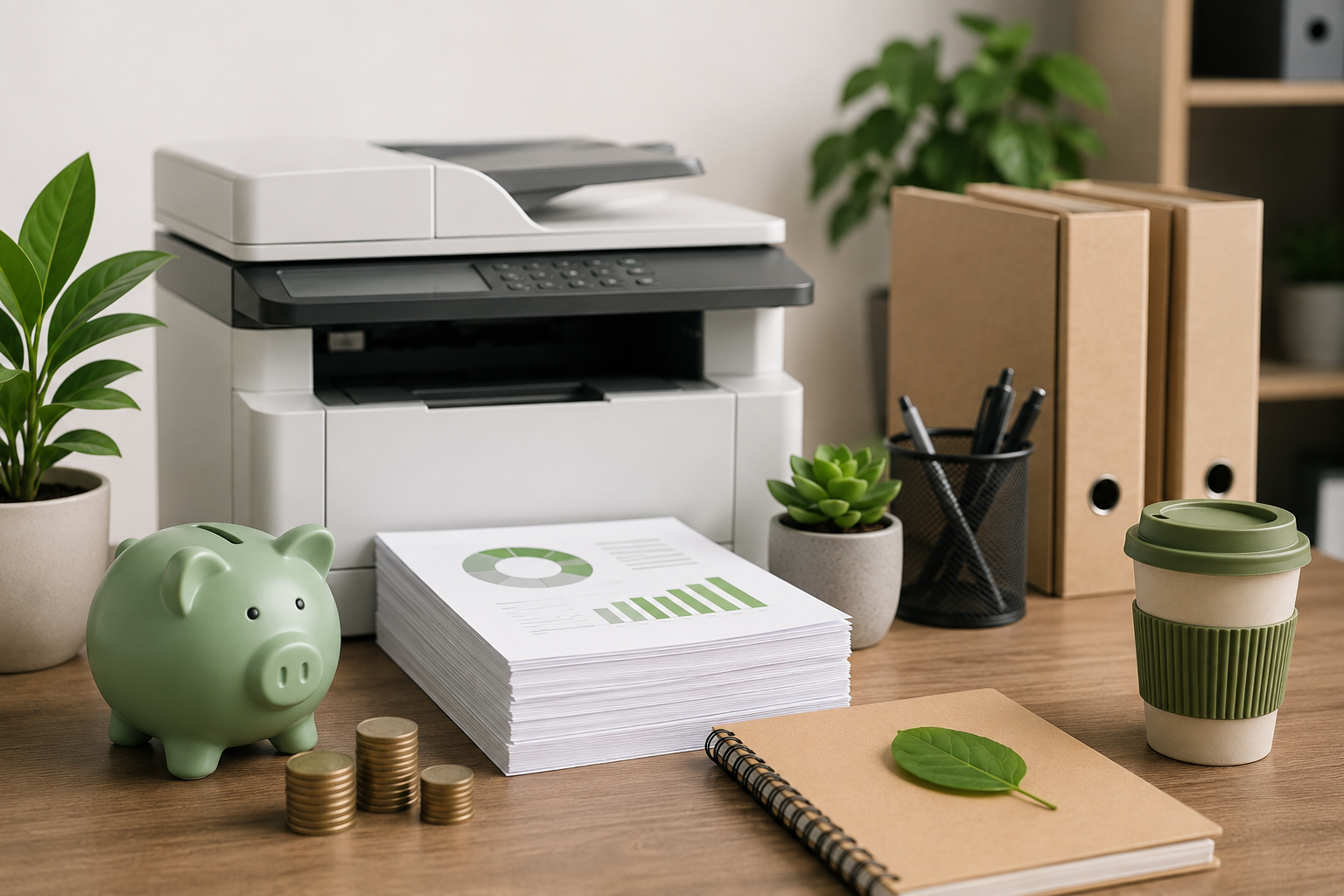
For small businesses, printing is an everyday business tool. Invoices, contracts, notes, worksheets, and customer forms are part of daily operations. The problem is not that you print a lot. The problem is that you often print expensively without realizing it.
In accounting firms, tutoring centers, and law offices, printing costs can be reduced dramatically—by as much as 70–90%—without any compromise in quality or professionalism. It simply requires making the right choices.
Why Printing Costs Get Out of Control in Small Offices
Most small businesses operate without a specific printing strategy. The printer was purchased at some point “just to have one,” supplies are replaced only when they run out, and settings remain as they were from the factory.
The result is a high cost per page, frequent toner or ink replacements, and lost productivity. Not because of excessive usage, but because usage is unmanaged.
Common Characteristics of Accounting Firms, Tutoring Centers, and Law Offices
These businesses share several important characteristics. They primarily print black-and-white documents in large volumes, with a focus on readability rather than color. The output must be clean and professional, but photographic-quality printing is rarely necessary.
This profile is ideal for achieving low printing costs when the setup is optimized correctly.
The Foundation of Savings: Choosing the Right Printer
For offices with daily printing requirements, a laser printer is almost always the best choice. It offers reliability, speed, and a lower cost per page. Inkjet printers, even when inexpensive to purchase, often become significantly more expensive over time in these environments.
A multifunction laser printer that supports high-capacity toner cartridges provides the most efficient foundation for long-term savings.
Compatible Toners: The Key to Unlocking 70–90% Savings
The greatest reduction in costs comes from using high-quality compatible toner cartridges. For everyday business documents, the difference in print quality is practically unnoticeable, while costs can be reduced by more than 60–70% compared to original manufacturer cartridges.
For offices printing hundreds or thousands of pages each month, these savings translate into substantial financial benefits.
XL and Jumbo Toners: Fewer Replacements, Lower Costs
High-capacity toner cartridges are not only more convenient. They also reduce the cost per page and minimize workflow interruptions. In tutoring centers and accounting offices, where printers are in constant use, this creates immediate operational advantages.
Fewer toner changes mean less downtime and fewer emergency supply purchases.
Print Settings That Reduce Costs Without Visible Differences
Most business documents can be printed perfectly well using normal or draft quality settings. Text remains sharp and readable while toner consumption decreases noticeably.
Automatic duplex printing is equally important. It cuts paper usage by up to 50% and keeps documents more organized, especially contracts and customer files.
Separating Print Jobs: A Smart Practice
Not every document needs to be printed using the same settings. Internal documents, drafts, corrections, and worksheets can be printed in economical modes. Final versions, customer-facing documents, and official paperwork can be printed in standard quality.
This distinction significantly lowers overall printing costs without affecting the company’s professional image.
The Hidden Cost: Time and Interruptions
Every unexpected toner replacement and every printing interruption has a cost. In small businesses, lost time directly translates into reduced productivity.
Choosing reliable supplies and appropriate equipment helps eliminate these hidden expenses.
Why Saving Money Is Not Just About Price
Printing savings are not achieved by simply buying the cheapest product available. They come from reducing the cost per page, minimizing replacements, and ensuring predictable, uninterrupted operation.
When this is achieved, printing stops being an uncontrolled expense and becomes a stable, manageable operating cost.
Accounting firms, tutoring centers, and law offices have all the characteristics needed to achieve significant printing savings without compromising quality. With laser equipment, high-quality compatible toner cartridges, XL options, and optimized settings, printing costs can be reduced by as much as 70–90%.
The difference is not visible in a single day. It becomes evident over the following months as expenses decrease, printing interruptions become less frequent, and business operations run more smoothly. That is the kind of savings that delivers real value.


