

FREE SHIPPING on purchases over 50 €
*Valid for consumables
How to Store Ink & Toner Properly to Prevent Damage
27/04/2026
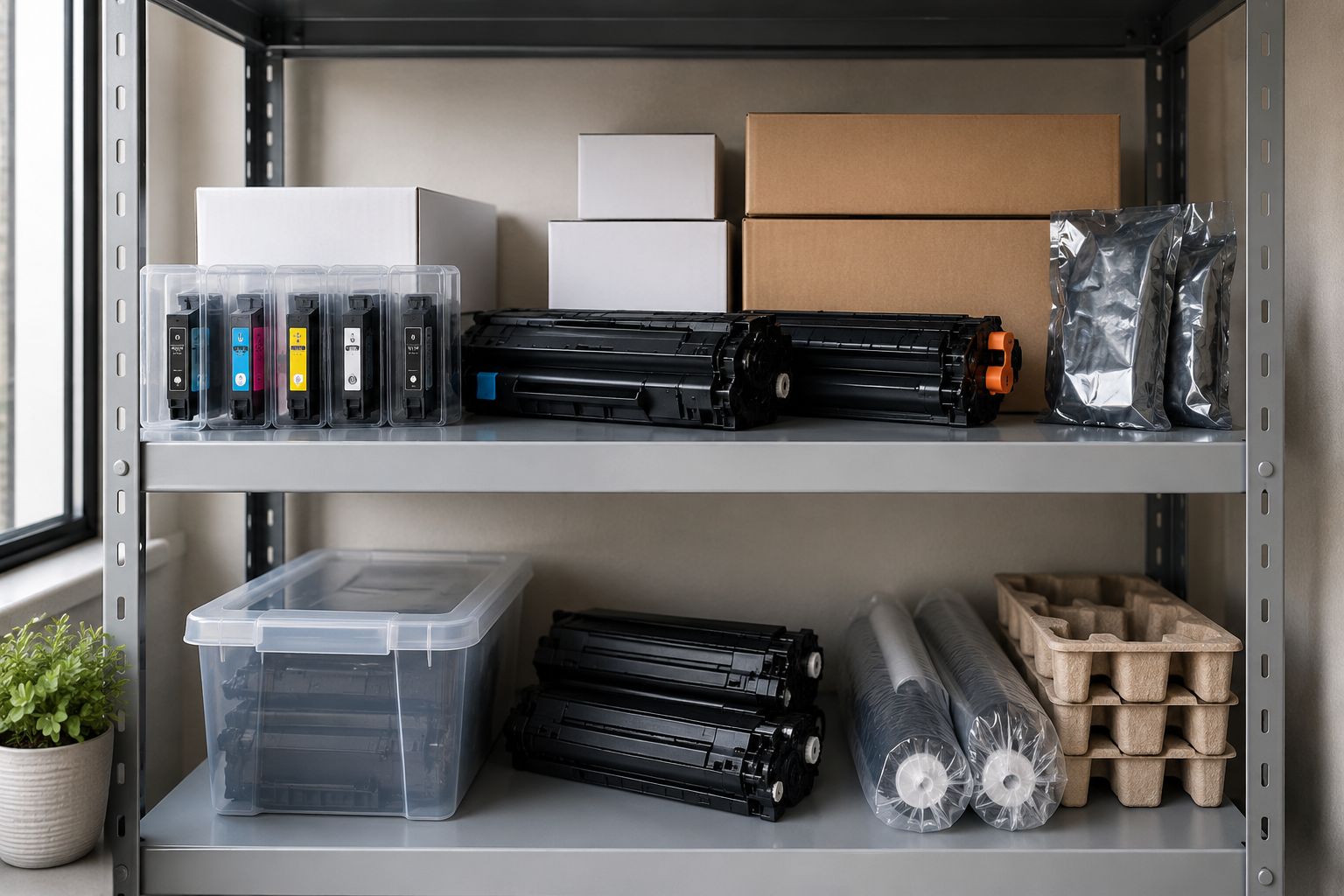
Many printing issues start before the ink or toner is even installed in the printer. Improper storage can lead to dried-out ink, poor flow, leaks, or toner that doesn’t perform correctly from the very first page. And the most frustrating part? The cartridge may be completely brand new.
Proper storage doesn’t require special equipment or technical knowledge. It simply means avoiding a few common mistakes.
Why Storage Matters So Much for Consumables
Ink cartridges contain liquid chemical compounds that are highly sensitive to temperature, air exposure, and humidity. Toner cartridges, although powder-based, are equally vulnerable to moisture, temperature fluctuations, and physical shocks.
When storage conditions are not ideal, damage may not be visible externally — but it becomes obvious as soon as you start printing.
Keep Everything in Its Original Packaging
The original packaging is not just for transport. It is specifically designed to protect the consumable from light, air, and humidity.
Removing ink or toner from its box “for convenience” significantly increases the risk of deterioration.
Open the packaging only when you are ready to install it in the printer.
Proper Temperature: Neither Too Hot Nor Too Cold
The ideal storage temperature is room temperature.
Excessive heat can alter the composition of ink and may cause leaks. Extreme cold can affect performance, especially with inkjet cartridges.
Avoid storing cartridges in unheated storage rooms, balconies, attics, or near radiators.
Humidity: Toner’s Biggest Enemy
Humidity is particularly harmful to toner cartridges.
It can cause the toner powder to clump, resulting in faded prints, streaks, or uneven coverage.
Store toner in a dry area and never near kitchens, bathrooms, or damp basements.
Store Them in the Correct Position
Most ink and toner cartridges should be stored horizontally, exactly as they come in their original packaging.
Incorrect positioning, especially for ink cartridges, can affect internal distribution and create flow issues.
Avoid storing them upright for long periods unless the manufacturer explicitly recommends it.
Don’t Remove Protective Seals Too Early
Protective tapes and seals are there for a reason.
If removed prematurely, ink is exposed to air and may begin drying out even if it is never used.
This is one of the most common causes of “dried-out” cartridges straight out of the box.
Pay Attention to Expiration Dates — But Don’t Panic
Ink cartridges have expiration dates because their chemical composition changes over time.
Toner cartridges typically have a much longer shelf life, though poor storage can still affect them.
If stored correctly, consumables often work perfectly even after the printed date. However, poor storage conditions can cause issues much earlier.
What to Do If You Store Consumables for a Long Time
If you keep stock for several months, periodically check the storage environment.
For toner cartridges, gently shaking them before installation helps distribute the powder evenly.
For ink cartridges, simply allow them to sit at room temperature for a while before use if they were stored in colder conditions.
The Most Common Costly Mistake
The most frequent mistake is careless storage.
Drawers near kitchens, humid storage rooms, or places with frequent temperature changes gradually damage consumables without any obvious signs.
By the time the problem appears, it is often too late.
Proper ink and toner storage is simple but essential. A cool, dry space, original packaging, and patience until the moment of use are all you need to keep consumables in excellent condition.
With just a little care, you can avoid wasted prints, unnecessary replacements, and the frustration of a “brand-new cartridge that doesn’t work.”
And especially for professional or student use, that makes a real difference.


